After immersing myself in a weaving class last July, I found myself captivated by the craft! Impatient to begin, I acquired an Ashford 8-shaft table loom soon after the course. However, as my weaving journey progressed, I yearned for the swiftness that only a floor loom could offer.
Enter the countermarch gem I stumbled upon in the marketplace. Upon picking it up, though, buyer’s regret hit me hard—it was much larger than anticipated! Determined, I spent weeks attempting to master it, only to face challenges like inadequate sheds and lam clashes when depressing the pedals. Lacking a manual, I grappled with unfamiliar terms like “tie-up” and the complexities of upper and lower lams. Frustration mounted as I worried I had invested in a subpar, unbranded loom and feared I was in over my head.
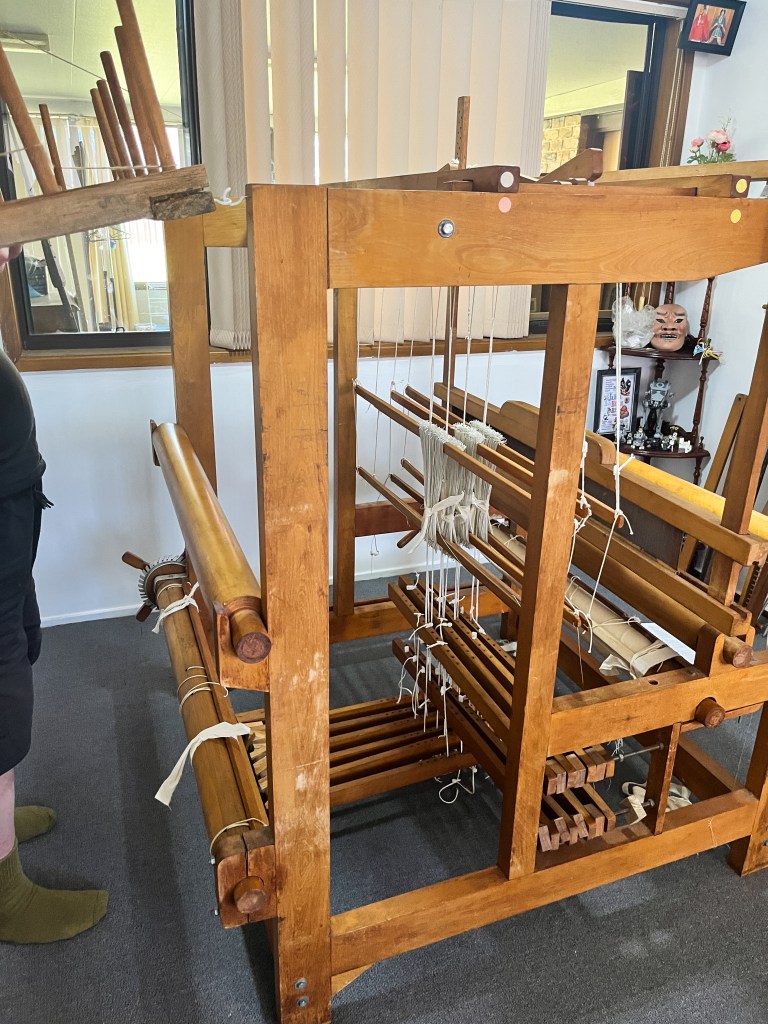
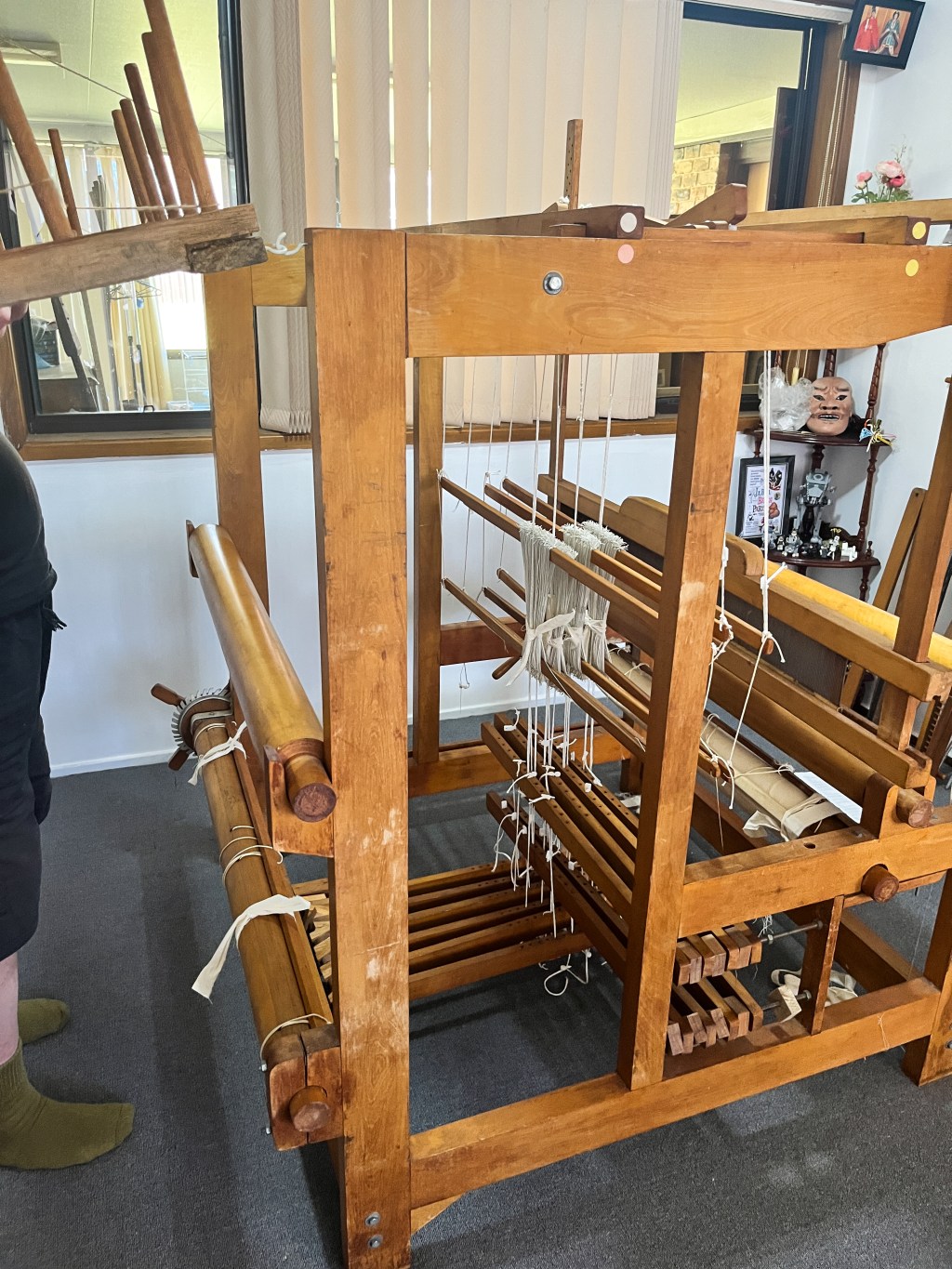
I made sure to capture a comprehensive set of pictures at the seller’s house before disassembling the loom. Recognizing the complexity of the task, I aimed to document every detail, ensuring a smooth reassembly process later on. The seller thoughtfully labeled each part and secured the lams, simplifying the reattachment process. However, the journey home was not without its challenges—some pegs dislodged during transport, necessitating careful rethreading upon my arrival.

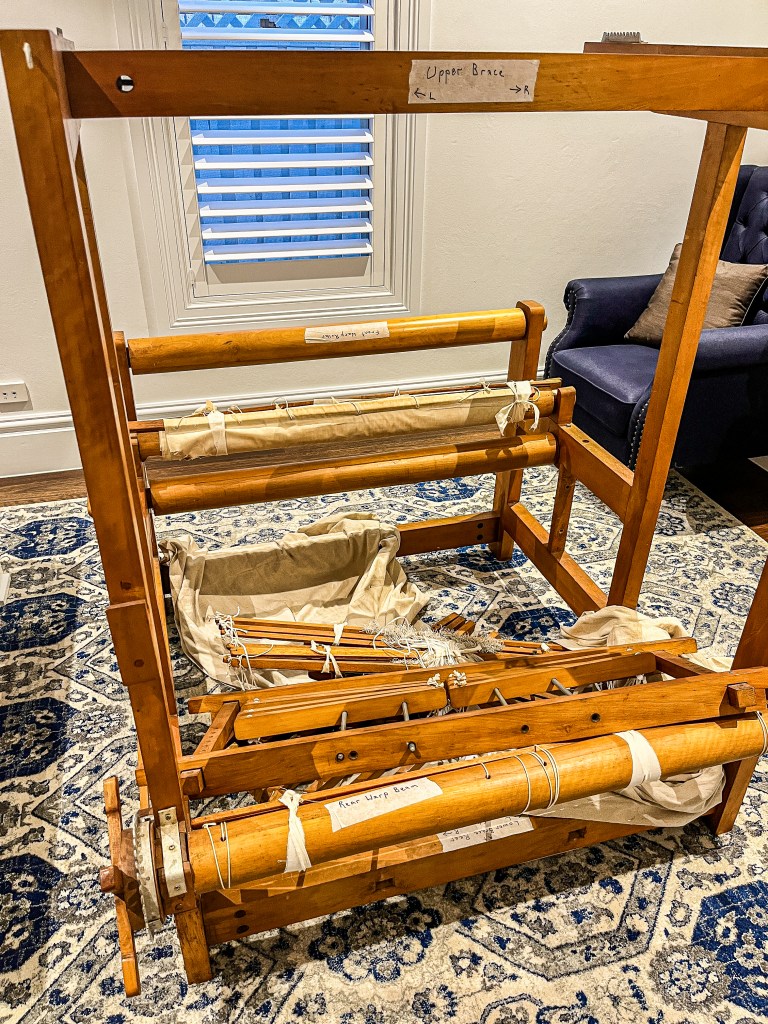
Following advice from my invaluable weaving teacher, I decided to warp up the loom to assess any necessary adjustments. Additionally, she recommended modifying the pedal lift sequence to 1+2, 3+4, 2+4, 1+3, 4+1, 2+3. This arrangement would enable pedalling “plain weave on the centre two pedals and twill in a walking fashion out from those.” Implementing these changes promised a more versatile and efficient weaving experience.
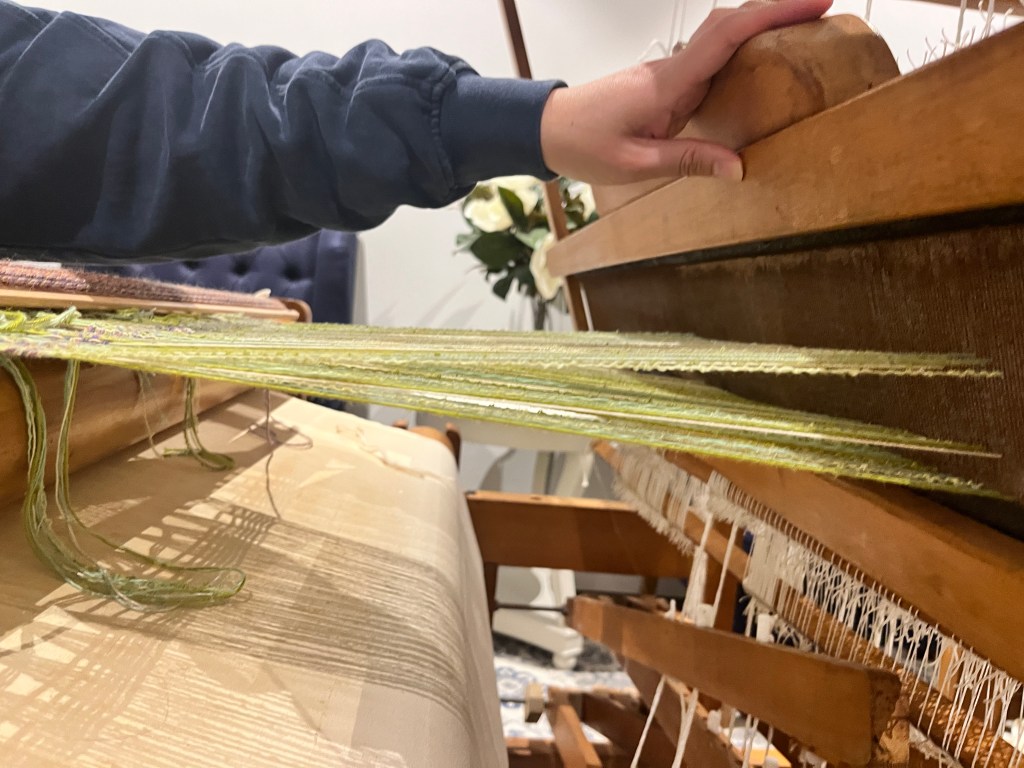
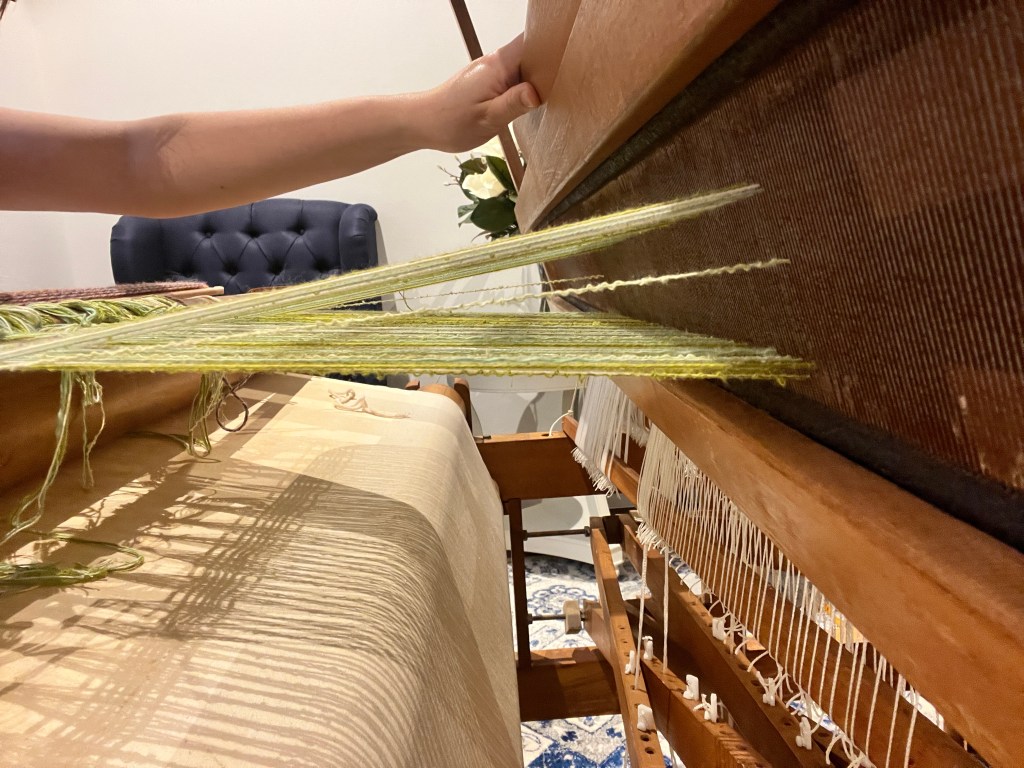
Left: The initial shed (quite horrendous!), Right: The improved shed after some adjustments to the lams and the beater’s height. Much better!
While my reed shows signs of rust, it surprisingly handles cotton and wool fibers well. Attempting to revive it, I experimented with cleaning using WD-40 and a toothbrush, but the task proved quite challenging.
I’m pleased to report that the loom is now fully functional, though the shed is still a bit finicky, it’s a significant improvement from before!
For fellow countermarch beginners, I found the following resources particularly helpful:
 pieced together
Leave a comment